

Replit Agent 4: The New Operating System for Product Development and Lifecycle
The end of design-to-code friction. Welcome to the era where your vision instantly becomes a living product.

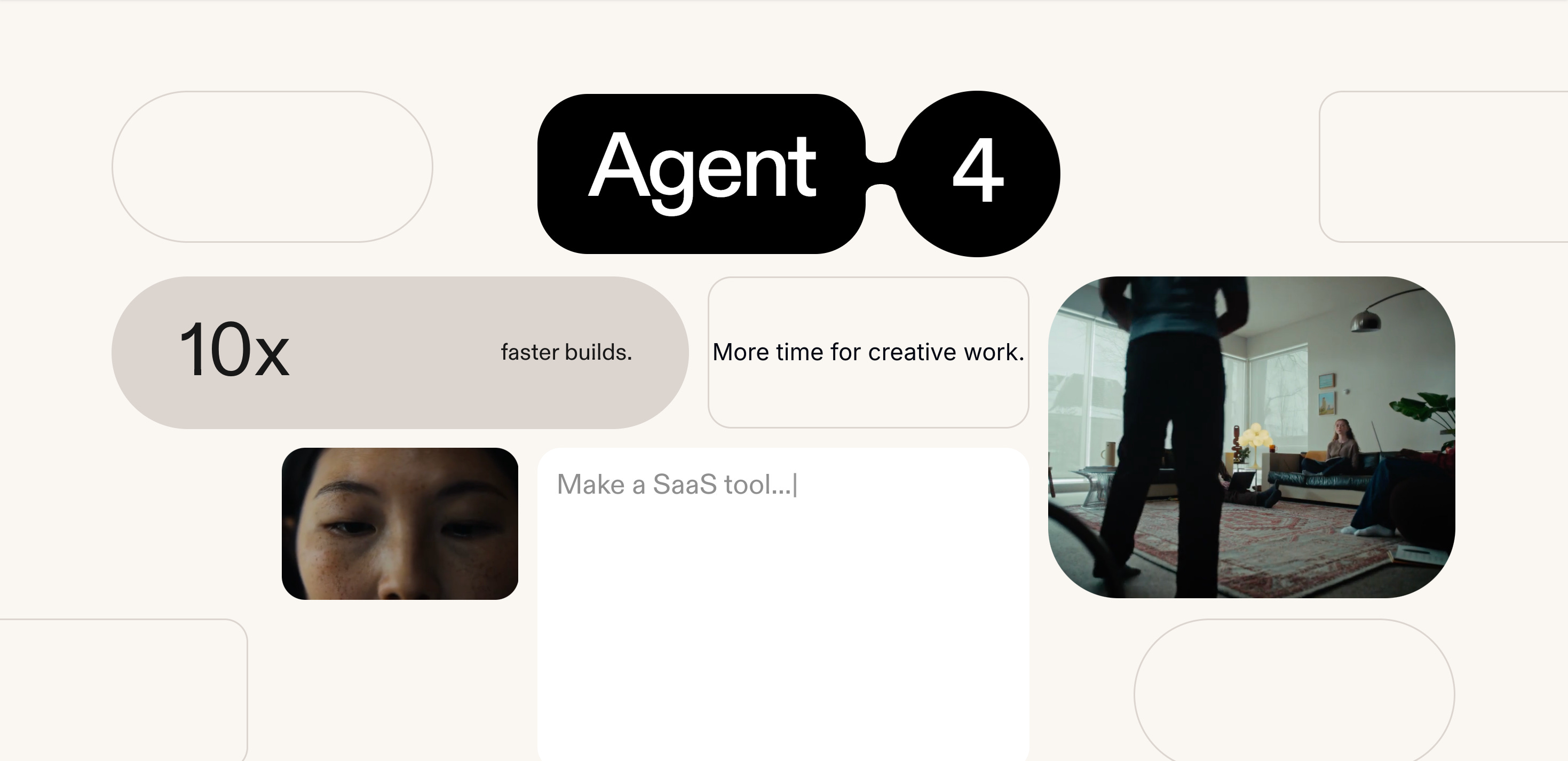
Replit was born as a “vibe code” platform. But today with Agent 4, we see it transforming into a comprehensive digital production tool, or rather, a fully-fledged product creation machine. I think in the coming months, this structure will cover the entire process of a digital product from its birth to its continuation. I mean from research to design, from development to growth, and then analyzing itself internally to become a comprehensive product body that heals itself.
I’ve been using Replit for over a year and I’m a firsthand witness to its evolution. I’m actually a user who frequently gives feedback and constantly bugs the platform. For the last 5 months, I’ve moved all my digital assets, my studios’ websites, and my studio’s AI-powered operating system (blurple OS) completely to Replit or built them directly on it. So Replit has already positioned itself for me as a hub where I combine, sustain, and continue to develop all my digital products.
I want to clarify something here. For digital projects that will truly become independent, pivot seriously, and grow on a heavy infrastructure architecture, I sometimes start them in Replit just to do a POC (Proof of Concept) and then move them to the Cursor environment. Or I just start these types of projects directly in Cursor. That’s the reality of the job.
But from getting quick outputs to maintaining my continuous platforms and micro-products I mentioned above, I keep them all in Replit. We’ve even made this a policy for our company, you could say. Because why wouldn’t we? Is there a more reliable development environment or infrastructure that better matches our needs right now? (There is still no European location for data center usage... if they add that too, it will be truly flawless.)
The main thing I want to talk about in this article is Replit Agent 4. We really need to think and write comprehensively about this update. Within the AI development world (call it what you want, I don’t really like saying “vibe code” because I think it makes the topic too light), we clearly see that Replit continues to carry the pioneering torch. The reason I kept this introduction so long was to point out how much importance Replit carries in the lives of me and people like me who develop products and have figured out the true power of AI.
Now with Agent 4, Replit has evolved into something we can’t quite describe yet. Because some guys in California or Tokyo haven’t invented a cool word for it yet. For now, I’ll call Replit a “product development and survival ecosystem”. We could even call it the new operating system of our lives for people like us.
I might sound like I’m talking too ambitiously. But what Agent 4 offers proves how much more Replit will position itself at the center of our digital lives and go even deeper. The management team handled this transformation with such calm, professional, and cool steps that it feels to me like they will go beyond the AI world and become our new Apple. I haven’t praised a brand like this in a long time, believe me, I’m surprised too.
So what will we be able to do with Agent 4? Or rather, how will we redefine that painful process we call “product development”? Let’s look at that.
The Collapse of the Wall Between Design and Code
I was thinking about this while walking Liza the other day. For years, there has been a meaningless translation problem between designers and developers. We get an idea, we draw a great interface, but that design loses its soul when it’s poured into code. Or that process drags on and on. With Agent 4 and what they call “Design Freely”, they’ve moved to a structure that does visual production and code production at the same time. Imagine an infinite canvas. While you play with the visual details of the app on one side, the Agent continues to build the code in the background while you refill your coffee. Interface and infrastructure are no longer two different worlds. You can instantly integrate that brilliant design idea that came to you in the shower into the product. The hassle of drawing first, getting approval, then handing it to the developer... meaning that terrible friction is finally over.
Escaping the Heavy Lifting and Focusing on “Intent”
Setting up user authentication systems, connecting databases, making the backend talk to the frontend... These used to be mechanical tasks that turned into late-night note-taking struggles, eating away at our brains. Agent 4 clearly says, you just put your intent out there, and I will handle the database, the background, and the frontend simultaneously with parallel agents. The point here isn’t just speeding up the work. As a team, we stop thinking “how do we code this”. Instead, we put our minds to “what will the user feel on this screen”. While Agent 4 does the heavy lifting of code and coordination, it leaves us only the creative strategy that comes with being human.
Not Just Software, A Comprehensive Product Ecosystem
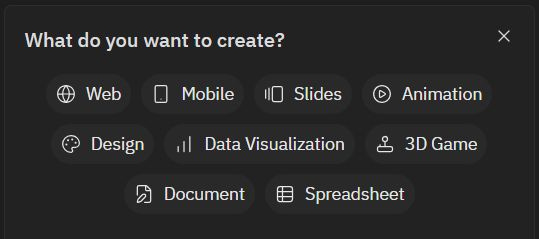
This part is critical. We aren’t just talking about pushing out a web app. Mobile apps, landing pages, pitch decks, and even videos... It can produce all of them within the context of the same project. Marshall McLuhan says “The medium is the message”. This medium of Replit gives us this message: The product is no longer a combination of code blocks written line by line, but a single reflection of your intent and vision in digital form.
The Ultimate Proof: Bringing the Giants Under One Roof
If you want concrete proof that Replit is evolving into this comprehensive product life cycle machine, just look under the hood at their subprocessors list. I was checking it recently and it is literally a who’s who of the tech world. Anthropic, OpenAI, Stripe, Twilio, Cloudflare, Datadog...
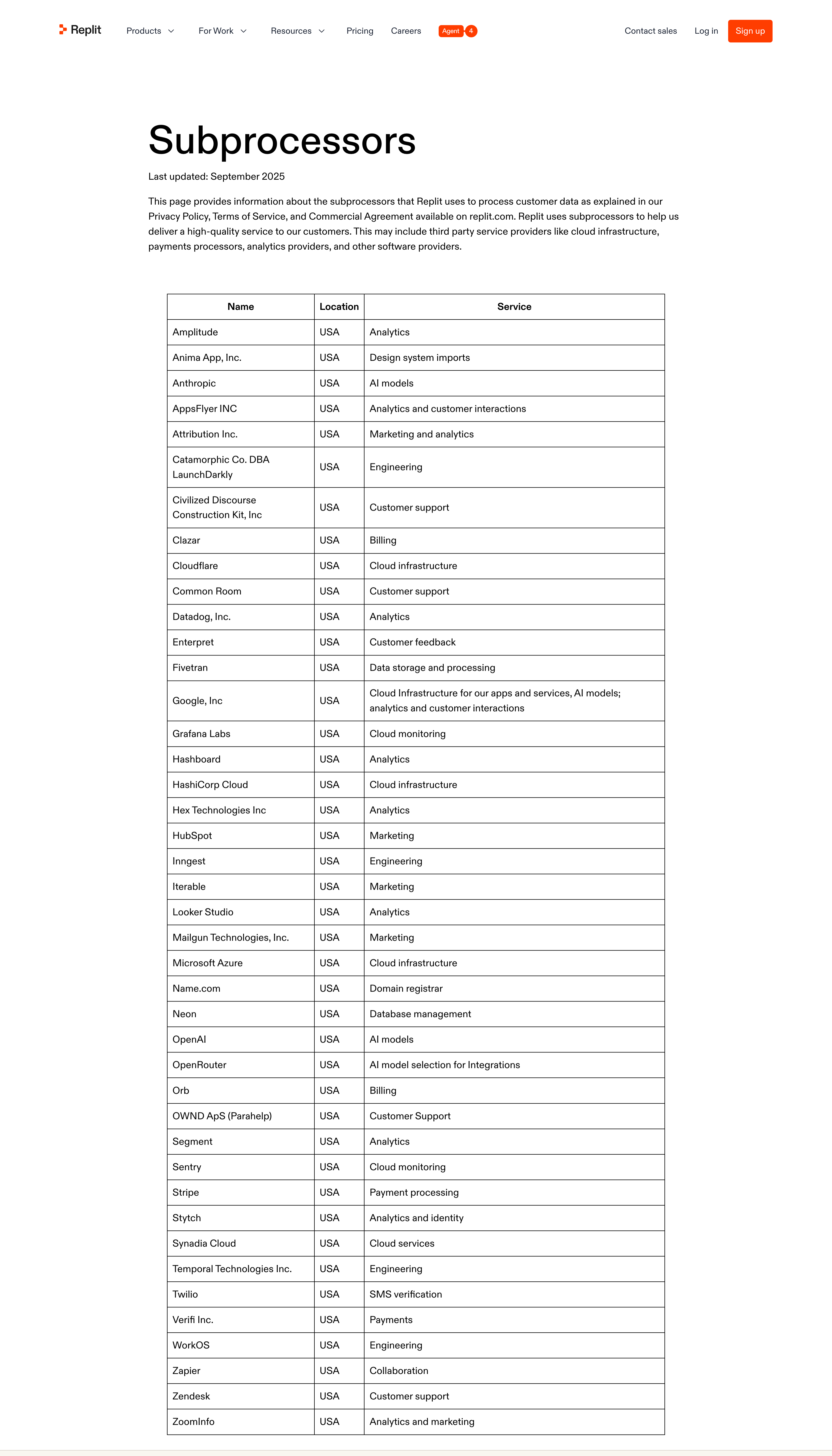
Replit has brought all these massive, independent players together. You no longer need to run around opening a dozen different tabs or trying to stitch APIs together like a mad scientist. They have gathered the biggest infrastructure and service giants and made them applicable from a single, unified point. This is exactly what proves they are building a true living hub, not just a coding interface.
So Where Are We Going From Here?
Remember at the beginning of the article I mentioned a comprehensive product body that will heal itself. Agent 4 is exactly building the nervous system of this organic structure. Today it builds code and design at the same time. Do you know what will happen tomorrow? After the product goes live, it will monitor user behavior. It will say “Users can’t find this button, there is friction here”, and without you even noticing, it will redesign that invisible interface and push it live instantly. It will run its own tests, it will pour its own growth strategy into code itself.
Instead of mimicking the clumsy software processes of the old world with AI, they are building a completely intent-based, organic, and breathing product infrastructure. In short, we aren’t just building things that run on a screen, we are rewriting the genetics of our digital assets. And yes, if they also solve that European data center issue, we will have a truly flawless digital home.