

Closing 2025: Embodied Intelligence, Broken Dreams, and Hard Realities
Closing the year of contrast: Navigating the collision between frictionless software and the friction of the real world.


We spent 2024 in a state of boundless optimism intoxicated by Large Language Models. It was a year where every startup appended .ai to its name, and every problem was presumed solvable by a chatbot. However, 2025 is going down in tech history as the growing pains of leaving adolescence behind. This year, we witnessed software stepping out of its flexible, forgiving nature and crashing into the hard walls of the physical world, while simultaneously unlocking new modes of production we previously couldn’t even imagine.
As product managers, we have claimed for years to be designing frictionless experiences. Yet, 2025 taught us that the real friction lies not in the interface, but in physical reality itself. On one hand, an era of immense ease where coding has transformed into a matter of vibe; on the other, hardware dreams hitting the limits of metal, battery, and energy.
The balance sheet of this year is not just about what didn’t work, but about what has changed irreversibly.
Vibe Coding and the Democratization of Creativity
Before we put on our critical glasses, we must acknowledge the most fascinating revolution of this year: Vibe Coding.
Coined by Andrej Karpathy and sitting at the center of our lives in 2025 with tools like Replit Agent, Cursor, and GitHub Copilot Workspace, this concept has transformed the act of coding from a syntax problem into purely an intent management problem. You no longer need to know Python; you simply need to describe what you want, how it should feel, and what purpose it serves.
This was a historic breaking point for Product Managers. Formerly, to bring an idea to life, we had to convince engineering effort, conduct sprint planning, and wait weeks for an MVP. In 2025, a PM can turn a feature idea conceived over morning coffee into a working prototype via Vibe Coding tools by lunch.
For the first time in tech history, the distance between idea and product has reduced to zero. This is not just a matter of speed; it means the removal of technical barriers standing in the way of creativity. Now, everyone is the architect of their own imagined software.
The Rise of Agents and the Silent Death of SaaS
While the production of software became easier, its consumption changed radically. 2025 became the year AI evolved from a passive assistant into an active Agent.
When OpenAI’s Operator or Microsoft 365’s Agent Mode came online, the equation shifted. Previously, software was designed for humans to use. In 2025, software was designed to do work. Booking a flight, conducting market research, or managing a complex return process... These are no longer tasks performed by a human clicking away at a screen, but tasks delegated to an agent.
This situation plunged the Per Seat pricing model, which has dominated the B2B world for twenty years, into an existential crisis. If one agent can do the work of a 10-person team in 10 minutes, do you sell the company 10 licenses, or 1?
The upward-trending SaaS revenue curves we saw in investor presentations were broken by this productivity paradox. We are no longer selling software; we are selling labor. This means pricing shifts from access to outcome. This is a transformation as frightening as it is exciting; because now we can measure the value of the product we sell not by time saved, but directly by value created.
The Hardware Graveyard and Hard Realities
While such massive leaps occurred in the software world, the physical world told us, not so fast. 2025 became the year Silicon Valley’s hubris of building hardware with a software mindset was most severely punished.

Devices like the Humane AI Pin and Rabbit R1 were marketed as revolutions that would replace the smartphone. The result, however, was devices turning into bricks and disappointment. The lesson here was clear: User behavior changes slower than hardware. When you take screens away from people and give them a heating laser projector strapped to their chest instead, you aren’t solving a problem; you are creating new ones like privacy and ergonomics.
In software, the MVP culture saves lives; you can fix buggy code with a midnight patch. But there is no MVP in hardware. You cannot release a physical product in beta. 2025 reminded us that milliseconds in digital mean damage in the physical world, that battery life is a UX problem, and that the laws of physics do not receive updates.
The Theater of Autonomy and Teleoperation
The same hard reality confronted us in the world of robotics. It turned out that behind those smooth movements we saw in Tesla Optimus and 1X Neo videos, there were often human operators wearing VR headsets.
Is this a failure? I think not. This is proof of how difficult the process of technological embodiment is. AI hasn’t fully embodied yet, but a new symbiotic relationship has been born between human and machine. We provide the mind; they provide the muscle power. However, a major risk arose for product management: Latency. When a chatbot answers late, you get annoyed; but when a remotely operated robot reacts late, it breaks the glass in its hand.
The Bill for Intelligence: Watt, Water, and Dollar
Right behind the hardware crises, another physical cost of the digital world emerged: Energy.
We were accustomed to thinking of software as infinite and free. But 2025 marked the end of this illusion. As AI models got smarter, their hunger for energy increased geometrically. It was no coincidence that Google and Microsoft accelerated their nuclear energy investments this year.
For a product manager, this means adding a new metric to the dashboard: Inference Cost. Previously, server costs were a negligible detail. Now, every single reasoning step of an autonomous agent translates into a real electricity bill and water consumption.
In 2026, the difference between a premium product and a standard product will be determined not by features, but by the intelligence level of the model used and the energy it consumes. For the wealthy, models that think deep and consume high energy; for the masses, models that are fast, shallow, and cheap. The digital class divide is now drawn not by access to data, but by access to energy.
PM 2.0: The End of Backlog Management
So, what happens to the Product Manager in this world of agents, autonomous coding, vibe coding, and energy constraints?
Let’s be honest: If your job is moving tickets in Jira, taking meeting notes, and grooming the backlog, 2025 was tough for you. Because AI agents now do these tasks better, faster, and 24/7. However, this is not the end of the PM; it is their renaissance.
Freed from the burden of being an executioner, the PM is returning to their true role: the System Architect. The successful product person of 2026 is the one concerned not with how it will be done, but with why and what will be done. As writing code becomes cheaper, choosing what to build becomes more expensive.
Human intuition, strategic vision, empathy, and ethical decision-making... These are competencies not found in an LLM’s training set, unable to be converted into tokens. The PM is no longer a project manager, but an orchestra conductor managing the digital workforce at their disposal.
Techno-Geopolitics and Digital Minimalism
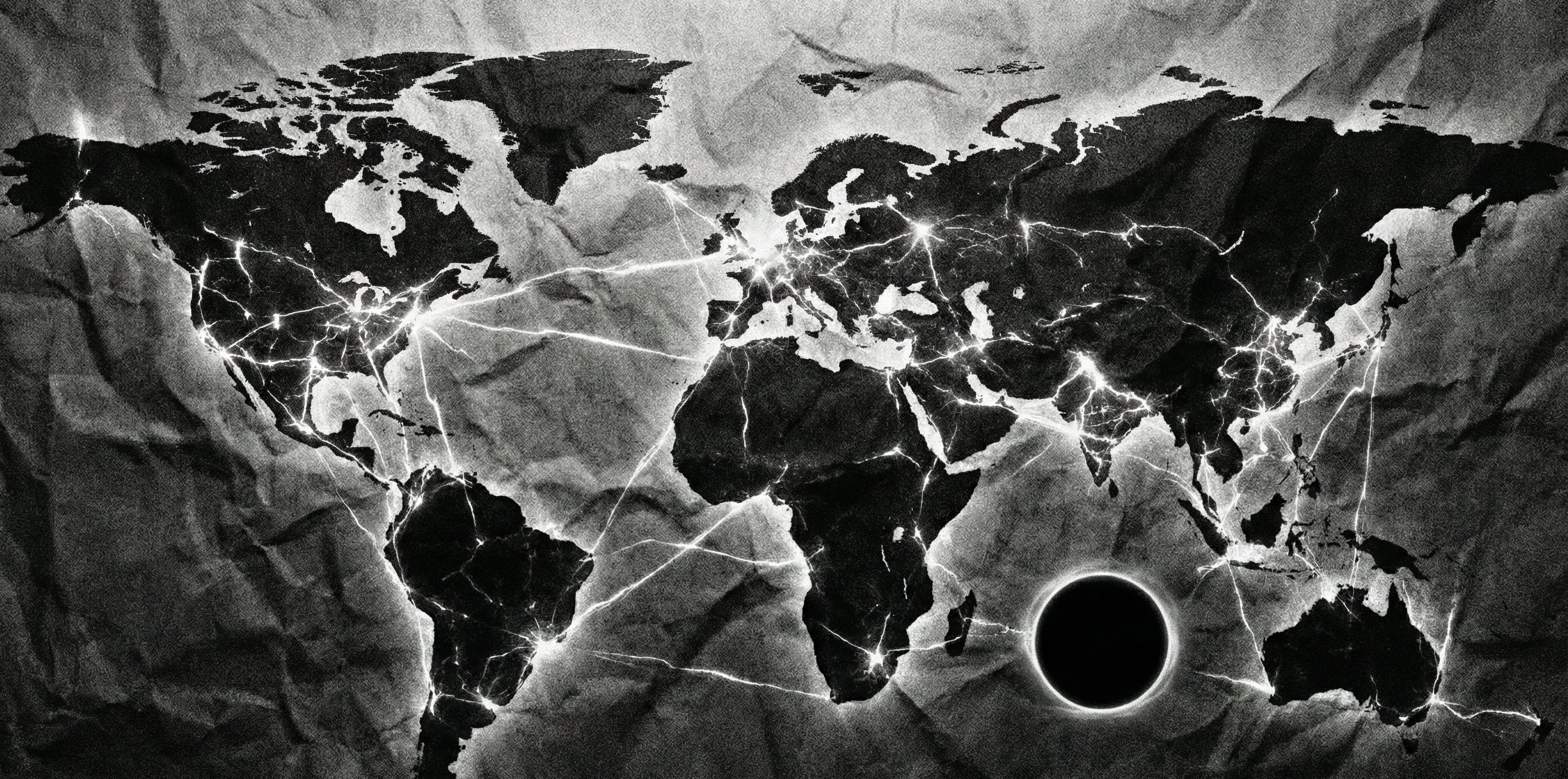
When we look at the whole picture, we see that technology is no longer a sterile laboratory product. The destructive price war launched by China’s DeepSeek against OpenAI and Europe’s defense of Sovereign AI with Mistral proved that code now has a nationality.
And amidst all this noise, human nature developed its own defense mechanism: Digital Minimalism. It is no coincidence that devices which disconnect, like the Light Phone III and reMarkable Paper Pro, broke sales records in a world where everyone is trying to sell more connectivity. People no longer want supercomputers; they want Calm Tech. Those rare moments where notifications are silenced and attention is undistracted became the most luxury consumer product of 2025.
Conclusion: The Easy Days Are Over, The Meaningful Days Have Begun
Closing 2025, we are far from the blind optimism of 2024, but we stand on much more solid ground.
We now know that AI is not a magic wand; sometimes it’s an intern writing great code, sometimes an assistant handling your tasks, and sometimes a child stumbling in the physical world.
The winning products of next year won’t just be those training smarter models. The winners will be those who integrate that intelligence into human life with the least friction, use energy efficiently, and most importantly; respect human attention and intent.
My 2026 Prediction: The Compression of Time
As I finish this piece, I want you to set aside product strategies and technical details for a moment and look at the calendar. Because that dizzying feeling we have is not psychological; it is entirely mathematical.
Let’s freeze the historical perspective for a moment: It took humanity approximately 1900 years to get from agriculture to the Industrial Revolution. From there, jumping to electricity and the internet took us only 60 years. The transition from Web 1.0 to Web 3.0 fit into 20 years. And moving from Generative AI to the era of Agents and Robots we discuss today? Only 2 years.
The fabric of time is compressing. Innovation cycles are no longer measured in generations or decades, but in months.
Therefore, my prediction for 2026 is clear: The coming year will be a faster year than ever experienced in the history of technology. We will witness the time it takes for the concept called future to turn into now approaching zero. Fasten your seatbelts; because the cracking sounds we heard in 2025 were not of destruction, but the sound of a rocket taking off.
I enjoy your overview. Please keep writing more of these contents. Cheers